 Admin - 04:00 pm -
July 15th, 2026
Admin - 04:00 pm -
July 15th, 2026 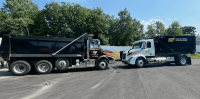
Tri-Axle Dump Truck Capacity: How Many Yards and Tons Can It Hold?
Planning a hauling job and wondering whether a tri-axle dump truck is big enough? Capacity comes down to two numbers — volume, measured in cubic yards, and weight, measured in tons — and the one that actually limits you depends entirely on what you're moving. Get it wrong and you're either paying for a second trip or sitting with an overloaded, illegal-to-drive truck. Here's a clear breakdown so you can size the job right the first time.
How many cubic yards does a tri-axle dump truck hold?
A tri-axle dump truck typically holds about 15 to 18 cubic yards of material. To picture that: a single cubic yard is roughly the volume of a standard washing machine, so 15–18 yards is about five to six full pickup truck loads in one haul. That's what makes a tri-axle so efficient for larger jobs — instead of a pickup running back and forth all day, you move the same material in a single trip. The exact figure varies by the truck's bed dimensions, but 15–18 yards is the reliable working range for most tri-axles.
How many tons can a tri-axle dump truck carry?
Volume tells only half the story — weight is usually the real ceiling. Depending on the specific truck and Massachusetts road-weight regulations, a tri-axle commonly hauls in the range of 15 to 22 tons of material per load. Those limits aren't arbitrary: state and federal axle-weight rules cap how much a truck can legally carry on public roads to protect pavement and bridges. A reputable rental company won't exceed them, because an overloaded truck risks fines, road damage, and safety violations. This is why dense material often hits the weight cap long before the bed looks full.
Yards vs. tons — why both numbers matter
The two limits behave differently depending on what you load, and knowing which one you'll hit first is the key to sizing a job correctly.
Light, bulky material — mulch, brush, leaves, loose construction debris — fills the truck by volume first. You'll reach 15–18 cubic yards and the bed will be heaped before you're anywhere near the weight limit. Heavy, dense material — gravel, sand, soil, concrete, asphalt, brick — hits the weight limit first. The bed can look barely half-full while the truck is already at its legal maximum. A common mistake is assuming a "full" truck means a full load: with heavy debris, full by weight comes well before full by volume. When in doubt, describe your material and we'll tell you which limit governs your haul.
What a tri-axle dump truck is best for
A tri-axle earns its keep on larger-volume jobs where a smaller truck would mean repeated trips and wasted hours: construction and demolition debris removal, bulk aggregate or fill delivery, large landscaping and grading projects, and site cleanups producing heavy loads. For lighter or smaller jobs — a modest cleanout, a few yards of mulch, a small renovation — a single-axle dump truck or a dump trailer is usually the more economical pick. Matching the truck to the job avoids paying for capacity you won't use.
Renting a tri-axle dump truck in Central MA
Because actual capacity varies by truck and by material, the safest approach is to tell us what you're hauling and roughly how much — we'll confirm the right size and give you a firm, no-surprises quote. Learn more on our tri-axle dump truck rental page.
Frequently Asked Questions
How many yards is a tri-axle dump truck?
About 15 to 18 cubic yards for most tri-axle dump trucks — roughly five to six pickup loads.
How many tons can it carry?
Commonly 15 to 22 tons, depending on the truck and Massachusetts weight limits.
Why can't I fill it to the top with heavy material?
Dense materials like gravel or concrete reach the legal weight limit before the bed is full. Loading past that point is unsafe and illegal on public roads.
Is a tri-axle overkill for a small job?
Often, yes. For lighter or smaller loads, a single-axle truck or dump trailer is usually more cost-effective — ask us and we'll recommend the right fit.
Can I rent one for a single day?
Yes. We offer flexible rental periods — contact us for daily and longer terms.